Hey Jon, thanks for your time and for kicking off this new interview series! Although I’m eager to learn about how you’re using AI in web design and development, I wanted to first ask you about writing since you’re impressively active across your blog, newsletters, and X. What does writing mean for you and how much time per day do you dedicate toward jotting ideas down?
Thanks for having me, Adrian. Happy to kick this off.
Great first question. Writing is simply how I think. I don’t sit down and say “time to write.” It’s more like I’m always processing something, and writing is how I figure out what I actually believe about it. A lot of my best ideas start as a half-baked thought I jot down in Apple Notes. Some of those turn into full articles for my personal site, some become newsletter content, and some just sit there until I realize the ideas were either wrong or at the wrong time.
In terms of time, I’d say I spend at least an hour a day writing in some form. But it doesn’t feel like “work” because it’s just how I process things. The articles on my site tend to be longer, opinionated essays whereas the newsletter content is usually much more bite-sized. I started documenting my thoughts and brain dumping a number of years ago and after doing it for a while I simply realized how powerful it was. Not just to fill a content calendar, but in every day life.
From seeing all your recent launches, you’re also a creator at heart and regularly deploying. How has AI fundamentally changed your daily workflow?
It’s hard to overstate how much things have changed since I started building for the web around 20 years ago. Before AI, I was either working a solo developer doing everything myself, or working with a team of developers. Every project was a time investment that needed to be justified. Building something meant committing days, weeks, or even months to it. Now I can go from idea to working prototype in a weekend.
The biggest shift is that I run multiple Claude Code sessions simultaneously. I’ll have one agent working on a feature for one project while I’m reviewing code on another. It’s like having a team without having a team. I’ve had the immense pleasure of working with very talented developers over the years, and the pace and how quickly I can turn ideas into something real reminds me of working with a team of developers sometimes. Things that used to take me a full day, like setting up a new project’s infrastructure, writing tests, or migrating a database, now take a fraction of that time.
What AI made possible that wasn’t before is the sheer volume of shipping. I launched more projects in the last year than I ever did. That just wasn’t realistic as a solo developer before. I also set up a portable dev environment on a VPS so I can code from anywhere, even my phone. This way I can literally ship from anywhere. That workflow simply didn’t exist just two years ago.
“I run multiple Claude Code sessions simultaneously. It’s like having a team without having a team.”
Have you found that newer LLM models are getting “close enough” on the design side? Or do you prefer to start in something like Figma before jumping into code?
Getting closer, but as I’m writing this, not there yet. For layout and basic UI, AI can get you 80% of the way. But that last 20% is where the actual design lives, the spacing, the typography choices, the little details that make something feel intentional instead of generated. AI still produces things that look “correct” but feel generic.
My approach depends on the project. For something like a landing page or marketing site where the design really matters, I’ll start in Figma to nail the feel and then move to code. For internal tools, dashboards, or MVPs where I just need something functional and clean, I’ll go straight to code with Tailwind and let AI handle the scaffolding.
Where I intentionally keep AI out is typography and visual identity. I care a lot about type. Choosing the right typeface, font parings, getting the hierarchy right, making sure things have the right weight and rhythm. AI tends to default to safe, predictable choices there, and that’s exactly what makes something look like every other AI-generated site. If I’m building something I want people to remember, the design decisions need to be mine.
Are there any go-to prompt patterns you tend to reuse? Funny enough, I’d say mine is usually to start by asking for vanilla HTML/CSS/JS, which is ironic since the past couple decades have mainly been about frameworks to make coding for humans easier.
Ha, yeah, there’s some poetry in that. My biggest pattern is giving Claude Code a very specific role and constraints upfront. I’ve found that the more context and boundaries you give it, the better the output. Here’s a real example of how I tend to kick off a feature:
You are working on [project name], a Rails app using Hotwire and Tailwind CSS.
The app does [one sentence description].

I need you to build [specific feature].

Constraints:
- Use existing patterns from the codebase (check app/views and app/controllers for conventions)
- Tailwind only, no custom CSS or inline styles unless absolutely necessary.
- Hotwire for interactivity.
- Keep it simple. If you're writing more than 50 lines for a single component, we're overcomplicating it.

Start by reading the existing code in [specific directory] so you understand the patterns before writing anything new.
The key is that last line. Telling Claude Code to read the existing codebase first means it matches your patterns instead of inventing new ones. Without that, you end up with code that works but looks like it was written by someone who’s never seen the rest of your project. I also often create or use existing Skills.md for things that I tend to reuse across projects. And obviously, entering plan mode and nailing the specifics of a feature really goes a long way, too.
Where do you see the value of domain names heading in the age of AI? On one hand, anyone can build and launch products at record speed. On the other, LLMs are beginning to make a dent in traditional search traffic. How do you think all this affects the long-term value of domains?
I think about this a lot, especially since I’ve bought more domains than I’d like to admit. Here’s where I’ve landed.
The value of domains is shifting but not disappearing. Search traffic is changing because people are getting answers directly from AI instead of clicking through to websites. That hurts content sites and SEO-dependent businesses for sure. But a domain isn’t just a search ranking. It’s a brand. It’s trust. It’s the thing people type into their browser when they already know you exist.
What AI has done is make the supply side explode. Anyone can build and launch something now, which means there are way more products competing for attention. And when there’s more noise, brand recognition matters more, not less. A clean, memorable domain is part of that.
Where I think domains lose value is the long-tail keyword stuff. Nobody needs “best-photo-editing-software-2026.com” anymore because AI just answers that question. But something brandable, where the domain IS the product name, those hold their value because they’re about identity, not search arbitrage.
So essentially, I think commodity domains are toast, and brand domains still matter. Maybe more than ever.
What are you most excited about building right now?
Honestly, all of it. I have a problem where I get excited about too many things at once.
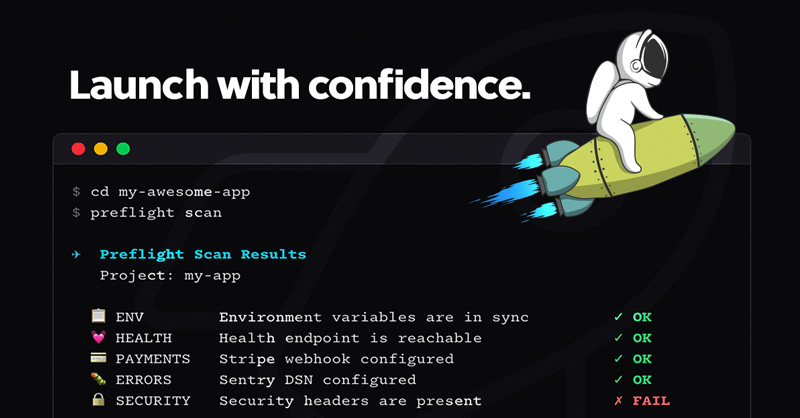
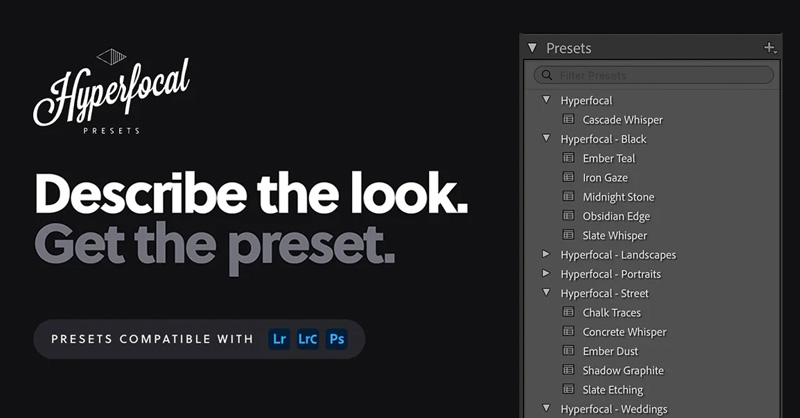
I have a soft spot for a tool I built called Preflight.sh, which is a CLI tool that scans your codebase before you deploy to make sure you haven’t missed anything. No AI in that one actually, just a straightforward tool that solves a problem I kept running into myself. I’m also building Hyperfocal, which brings AI into the photography world in a way I think photographers will actually find useful. I’ve been involved in photography for over a decade now and it seemed fitting for me to bring some of that product and AI knowledge.
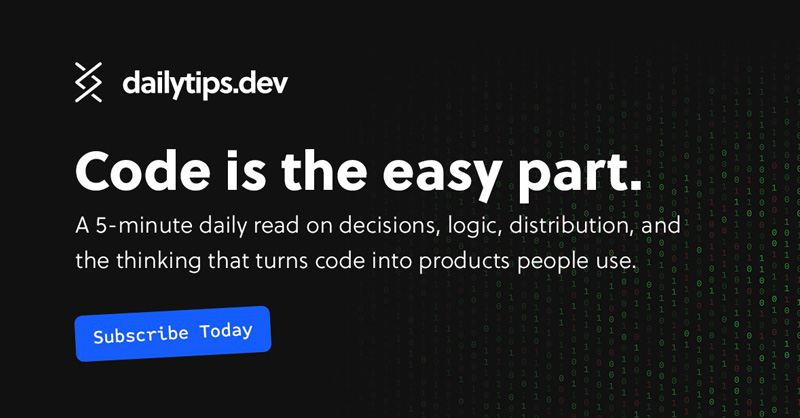
On the content side, I’m building dailytips.dev with my buddy Marko Denic. We both felt like most dev newsletters focus on syntax and frameworks but skip the harder stuff, like how to actually get people to use the thing you built. So we’re writing about that instead.
And I’m still absurdly bullish on email. I’ve been running newsletters for over a decade, and I’m more convinced than ever that email is the most undervalued channel out there.
I have some ideas brewing around helping founders improve their email presence and actually use their lists as a real growth lever instead of an afterthought, but more on that soon.
Finally, what advice would you give to someone breaking into the design and dev field today?
Build things and put them out there. That’s it.
I know that sounds reductive, but after 20 years of doing this, it’s the one thing that consistently matters. Nobody cares about your portfolio until it has real projects in it. Nobody cares about your resume until you’ve shipped something people actually use. The people who get ahead are the ones who build things, put them online, and tell people about them.
Also, start a newsletter. I’m biased, obviously, but email is the most underrated distribution channel that exists. Every social platform changes its algorithm on you. Email just works. You write something, you hit send, it shows up in their inbox. No algorithm deciding if they see it. I’ve built entire businesses on the back of email. It works.
Learn distribution, not just development. The best code in the world doesn’t matter if nobody knows it exists. Learn how to get your work in front of people. That skill compounds over your entire career in a way that knowing the latest framework simply does not.
And don’t wait until something is perfect to ship it. Ship it ugly. Ship it scared. The feedback you get from real users is worth more than another month of polishing something nobody has seen yet.
Thanks again for all the effort you put into building useful tools and sharing insights. Looking forward to seeing what you launch next!
Thanks for having me. This was fun. If anyone wants to follow along with what I’m building, joncphillips.com is where I write about all of it, and @joncphillips on X is where I post the stuff that’s too short for an article but too long for my own head. Appreciate the interview.