Hey Ruurtjan, I really appreciate your time. It feels like just yesterday you were quitting your job to build web tools, now a handful of years have passed. I’m sure many devs have at least thought about making a similar transition and I’m wondering if you have any specific advice for them.
My main advice would be to pick a project you believe in and stick with it. I’ve had my fair share of abandoned side projects, and managed to go full-time only after committing to one for a couple of years. I wrote a post on how to pick a side project a couple of years ago.
You’ve also created a variety of online tools, such as NsLookup, a DNS course for developers, and other successful launches (nice work, by the way). First off, I’d love to know if you have a personal favorite and what the common thread is between all these, if there is one.
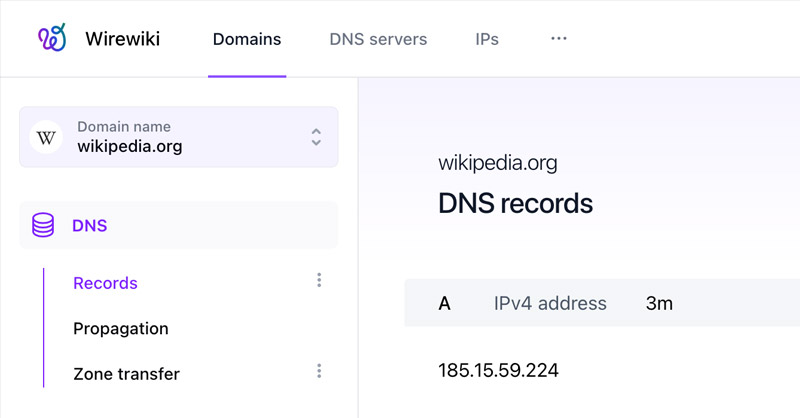
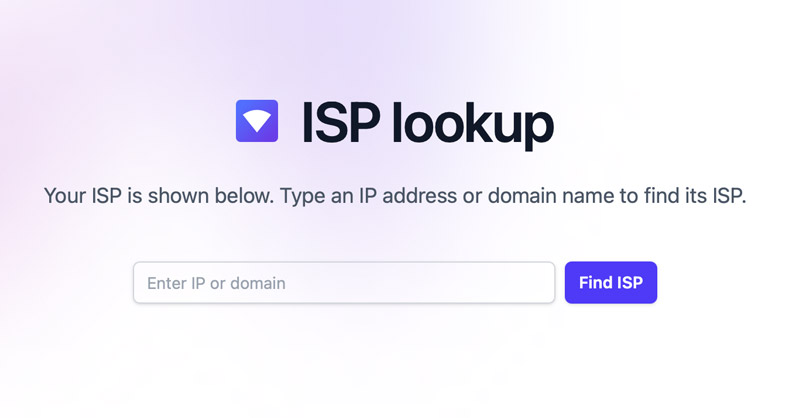
I’ve got this rule that I don’t start a new project unless everything on page 1 of Google is different from how I’d build it. That was true for what is my ISP? (because there was no single-purpose online ISP lookup tool at the time), Nslookup (all other tools didn’t list all common DNS record types, or didn’t allow easy switching between DNS servers), and it’s true for Wirewiki (existing tools are one-off, while Wirewiki interconnects assets).
Wirewiki is my most ambitious project yet, because of its scope, and the one I’m most excited about. More on that later in this interview ;)
“I don’t start a new project unless everything on page 1 of Google is different from how I’d build it.”
Somewhat related to the previous question, were there any unfinished projects that you think are more feasible now with AI? If so, I’m curious why, whether it’s due to complex math/code that LLMs can help with, time savings, or something else entirely.
Absolutely! Large code bases take a lot of time to get familiar with, so it didn’t make sense to clone and tweak them for your own niche use case. But with AI, I find myself occasionally doing just that. Sometimes to adjust behaviour, and sometimes just to understand how they work under the hood, so I can leverage them better.
For example, I recently cloned the Bind9 git repo and went back-and-forth with AI to find the best way to get it to do what I needed. We explored the configuration options, the plugin system and several design options for changing the source itself. I would have never done that if it weren’t for AI.
Can you walk us through what your current dev stack looks like in terms of preferred IDE, LLM model, and anything else you’d like to highlight?
I feel like I’m not exploring enough here. There is probably a more optimal setup that I haven’t discovered yet. But things are moving so fast that I’m exploration fatigue. I don’t want to spend all my time testing IDEs, models and tool chains. Right now, my strategy is to be slightly behind early adopters (although I suspect there are a lot more developers that don’t leverage AI as much as I do). If I hear people using something successfully quite often, I’ll take some time to explore. Right now I’m using Cursor precisely because I don’t want to switch tooling every time another model takes the crown.
Have you noticed any recurring prompts or agent skills that you lean on the most recently?
Not really, but I’ve thought about teaching AI to do things like formatting. I ended up wiring formatting and testing into my pre-commit hook. That way I can tell AI not to worry about the order of Tailwind classes, for example.
I was excited to see Wirewiki launch as well. Can you tell us about that project and any new features you’re currently working on?
Traditional network debugging tools do one isolated thing: a single DNS request, a traceroute, a ping. But the internet is inherently a graph of assets. So I set out to make that graph explorable. Yes, I do offer all those tools, but when displaying the results, I enrich them with linked assets, and allow users to click through to them. That way Wirewiki feels more like a map of the internet and allows you to get a full picture instead of an isolated snapshot.
Right now, I offer mostly DNS related tools, so there’s a lot to be added still. Right now, I’m working on adding a database of historical DNS records for the 1 million most popular domain names. That will allow you to find domain names that use a certain IP or mail provider, for example, which isn’t possible with DNS itself.
Thanks so much for not only chatting today but for all your help bouncing ideas over the years. Any final wisdom or motivation you’d like to share with designers or devs?
Thanks for hosting me!
If you’re just getting started now, I envy you! Don’t leverage AI to build faster, but to learn faster. You’ll be able to grow to seniority much faster than anyone before you. I had to read books and struggle through silly mistakes. You can fast-track it if you use AI understand the systems you’re using. Your cycle time will be faster, and, therefore, your learning rate will be higher. Use the leverage that’s available to you!